
Modernist Literature for Beginners: Five Novels That Actually Welcome You In
Modernist literature has a reputation problem. Say the word modernism and people think of dense symbolism, fractured timelines, and novels that feel like homework. But that reputation isn’t the whole truth.
At its heart, modernism is simply literature turning inward. Writers became less interested in grand plots and more curious about consciousness. And some modernist novels hold the door open for you rather than make you force your way in.
These five books are ideal entry points. They’re emotionally legible, and stylistically generous. You don’t need a syllabus to read them. You just need curiosity.
1. Dubliners — James Joyce (1914)

If you’re intimidated by Joyce, Dubliners is the antidote. No experimental fireworks. No linguistic puzzles. Just clear, precise stories about ordinary people moving through small moments that quietly change them.
Each story circles around a subtle realization rather than a dramatic revelation. A child glimpses adult disappointment. A clerk senses his own stagnation. A dinner conversation reveals an emotional truth no one can name out loud.
What makes Dubliners such a generous introduction to modernism is its restraint. Joyce isn’t trying to dazzle you yet. He’s teaching you how interior life can carry as much weight as action.
Many readers, myself included, finish The Dead — the final story — and realize modernism can be powerful without being difficult.
2. Mrs Dalloway — Virginia Woolf (1925)

At first glance, Mrs Dalloway sounds almost too slight. It’s about one day in the life of a woman preparing for a party. But Woolf uses that narrow frame to explore something vast.
This novel doesn’t ask you to decode it. It asks you to drift with it. Woolf’s prose follows consciousness as it jumps between memories, sensations, regrets, and fleeting joys. Time folds in on itself. The past presses gently against the present.
What makes Mrs Dalloway welcoming is its emotional clarity. Clarissa’s questions are universal. And Woolf balances interior richness with social observation, grounding the novel in London’s streets and rhythms.
If you’ve ever walked through a city lost in thought, this book already belongs to you.
You can find more Woolf in my The Best Experimental and Nonlinear Novels You Must Read post.
3. The Sun Also Rises — Ernest Hemingway (1926)
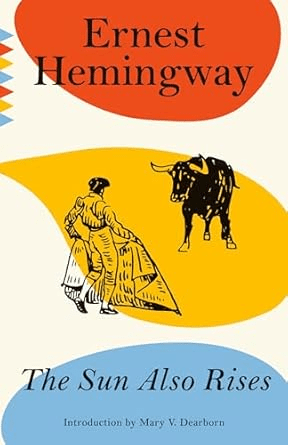
Hemingway is often taught as realism, but The Sun Also Rises is modernist in its emotional architecture. The famous restraint hides a profound psychological wound.
Jake Barnes and his friends move through Paris and Spain after World War I, drinking, traveling, and talking around what cannot be said. Trauma exists in the silences. Desire exists in what’s withheld.
This is modernism without stylistic intimidation. Hemingway’s innovation is emotional minimalism and meaning emerges through omission. For beginners, that clarity is a gift. You feel the ache even if you can’t articulate it yet.
Reading this book for the first time often feels like discovering that understatement can be more powerful than confession.
4. Passing — Nella Larsen (1929)

Passing is one of the most accessible modernist novels ever written, not to mention one of the most psychologically sharp.
Larsen tells the story of two Black women who can pass as white, exploring identity as something unstable and performative. The prose is elegant and controlled, but the tension underneath is constant. Every social interaction carries risk.
Larsen doesn’t experiment for experimentation’s sake. She uses modernist techniques like interiority, ambiguity, and unreliable perception in service of urgent human questions: Who are we allowed to be? What does it cost to belong?
For readers new to modernism, this book often feels startlingly contemporary. It doesn’t feel like a historical artifact. It feels alive.
Larsen is also part of my look at 8 Underrated Women Writers of the 20th Century You Need to Read.
5. The Metamorphosis — Franz Kafka (1915)

Kafka might seem like an odd choice for “welcoming” modernism, but The Metamorphosis works precisely because its premise is so clear. A man wakes up transformed into an insect. The rest of the story asks: what does that reveal?
Kafka’s genius lies in treating the absurd with calm seriousness. No explanation is offered. No symbolism is spelled out. Instead, the focus stays on family dynamics, shame, obligation, and alienation.
Despite its surreal surface, the emotional logic is painfully recognizable. Many readers don’t remember the insect but they remember the feeling of being a burden, of no longer fitting into the role others expect.
It’s short. It’s strange. And it’s one of the clearest illustrations of what modernism does best: turning internal anxiety into narrative form.
Where Should I Start With Modernist Literature?
- Start with Dubliners if you want clarity and emotional realism
- Start with Mrs Dalloway if you enjoy reflective, interior prose
- Start with The Sun Also Rises if you prefer clean style and subtle emotion
- Start with Passing if you want psychological tension and social insight
- Start with The Metamorphosis if you’re curious about modernism’s stranger edge
Closing Reflection
Modernism isn’t a locked room. It’s a shift in attention. These books don’t demand expertise but they do reward patience. They invite you to slow down, to notice how thoughts move, how feelings contradict themselves, how identity changes depending on who’s watching.
If you’ve ever felt overwhelmed by modernist reading lists, start here. These novels don’t test you. They meet you where you are.
Some links on this site may earn a small commission at no additional cost to you. I only recommend books, music, and products I genuinely love and believe will resonate with readers.


