
The Best Octavia E. Butler Novels, From Good to Essential
Ranking Octavia E. Butler is a risky little exercise.
Not because she wrote a giant shelf of books. She didn’t. It’s risky because even the Butler novels that land lower on the list still contain ideas most writers would build an entire career around. She wrote about power with unusual sharpness. About dependency, hierarchy, survival, intimacy, adaptation, and the ugly ways human beings keep reinventing domination even when they should know better.
That tension runs through nearly all of her work. Whether she’s writing about time travel, telepathy, alien transformation, slavery, religion, or social collapse, Butler keeps circling the same hard questions. What does consent mean inside unequal systems? What happens when survival comes tied to obedience? Why do people keep rebuilding the very structures that harm them?
That’s also what makes ranking the best Octavia Butler books so difficult. There are very few easy dismissals here. Even the less essential novels still feel alive with her concerns, her pressure, her ability to make political systems feel personal and physical.
So this list is not really about masterpieces versus failures. It’s more about which books feel most complete, most unsettling, most emotionally lasting, and most unmistakably hers.
Here are Octavia Butler’s books, ranked from least essential to greatest.
12. Survivor (1978)

If an Octavia Butler ranking needs a last-place slot, Survivor is the obvious choice.
That doesn’t mean it’s empty. You can still see Butler working through themes that would define her later fiction: belonging, alienation, adaptation, cultural collision. But compared with the books that followed, it feels like early Butler rather than full-strength Butler.
What stands out now is how clearly she was still searching. The intelligence is there. The moral tension is there. But the book doesn’t cut as deeply as Kindred, Wild Seed, or the Parable novels.
So yes, it belongs at the bottom. Not because it’s a wreck, but because everything above it shows just how much sharper and more haunting Butler would become.
11. Fledgling (2005)
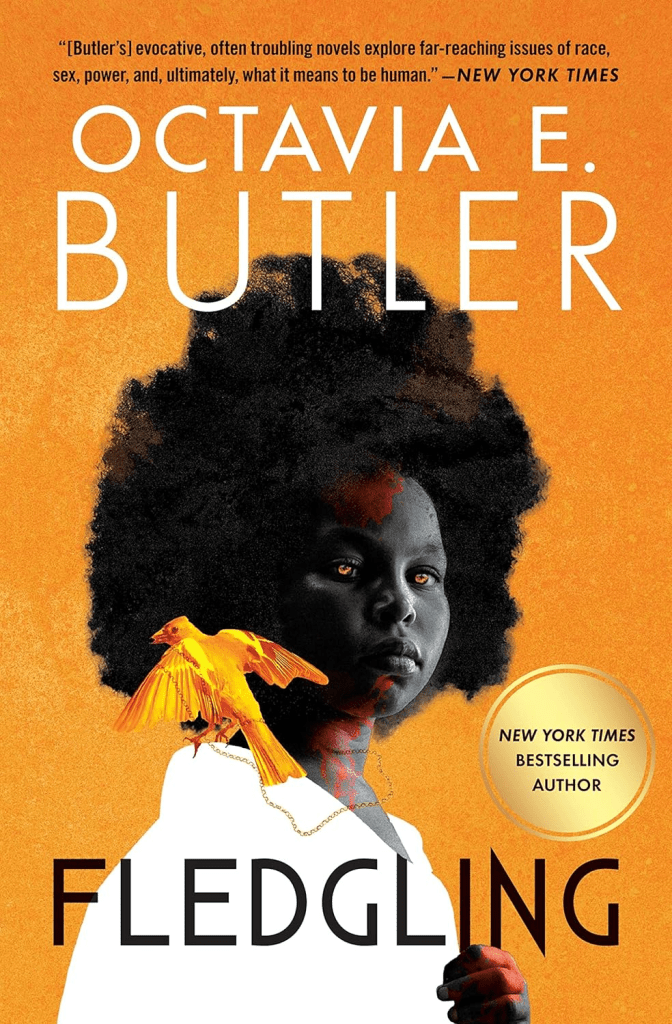
Fledgling is one of the more divisive Octavia Butler books, and that makes sense.
Its setup sounds deceptively simple: a young, amnesiac, girl-like figure survives a violent attack and tries to piece together who she is. But this is Butler, so the story quickly turns into something much more complicated. Species identity, family structure, desire, dependency, and power all get tangled up fast. The vampire material is really just the doorway.
What Butler is actually interested in, as usual, is coercion dressed up as intimacy.
There are readers who love this book for exactly how uncomfortable it is, and I get that. Butler is once again pressing on the weak spots between consent and need, affection and control. But as a novel, it feels looser than her best work. The ideas are strong. The tension is real. It just doesn’t gather the same force as the books higher on this list.
Still, even mid-tier Butler is more thought-provoking than most writers at their peak.
10. Mind of My Mind (1977)

This is one of those Octavia Butler novels that gets more interesting the longer it sits in your head.
Part of the Patternist series, Mind of My Mind explores the rise of a new psychic order built on telepathy, hierarchy, control, and dependence. In lesser hands, that might have become sleek world-building. Butler makes it social, bodily, and uneasy. Power in her books is never abstract. It always gets lived through, enforced, negotiated, and paid for.
The ideas here are excellent, but the novel feels more like a bridge than a destination. You can sense Butler developing the structures of domination and community that would become even richer later on.
That said, this is where the machinery really starts humming. You can feel her becoming more fully herself on the page.
9. Clay’s Ark (1984)

Few Octavia Butler novels feel as physically grim as Clay’s Ark.
This is Butler at her most biologically unsettling. Infection, mutation, compulsion, survival. None of it is romantic. None of it feels thrilling in the usual science fiction sense. Butler is interested in what happens when the body stops being a neutral home and starts making demands of its own.
That gives the novel real force. It also makes it one of her bleakest reads.
Clay’s Ark is relentless in a way I admire more than I love. It traps you inside its logic and doesn’t offer much relief. Compared with Butler’s greatest novels, it feels narrower and more punishing, with less emotional range. But if you want to see how effectively she could turn science fiction into a study of compulsion and collapse, this book matters.
8. Patternmaster (1976)
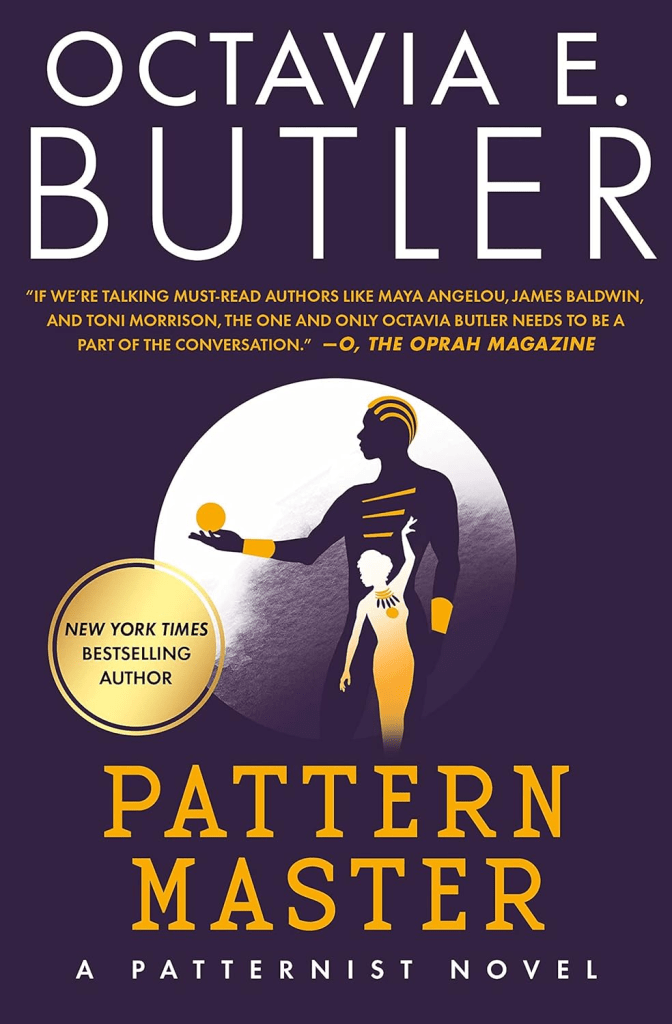
Putting Patternmaster in the lower half may annoy some longtime fans, but I think it fits.
It’s an important book in the Patternist sequence, and Butler was already writing about hierarchy with remarkable clarity. Psychic power, status, breeding, domination, social structure. All the familiar Butler concerns are here.
But as a reading experience, it feels more designed than fully lived in. The world is interesting. The ideas are important. The emotional life is thinner than in the books that came later.
That’s really the issue. Patternmaster is significant, but it doesn’t quite have the human density of Butler at her best. You admire it more than you feel pinned to the wall by it.
7. Adulthood Rites (1988)

This is where ranking Octavia Butler gets painful.
Adulthood Rites is a very strong novel. In most writers’ catalogs, it would place even higher. As the second book in the Xenogenesis trilogy, it takes the moral and biological tensions of Dawn and pushes them into stranger territory.
That’s what makes it so good. Butler does not settle for repeating the first book. She deepens the problem.
The novel asks what children inherit when the old definitions of humanity have already begun to fall apart. Identity here is unstable on purpose. Kinship, reproduction, species continuity, selfhood. Butler keeps shifting the ground under your feet.
It’s smart, unsettling, and often moving. It lands here only because the books above it hit even harder.
6. Imago (1989)

This is the ranking’s deliberate curveball.
A lot of readers treat the Xenogenesis trilogy as if Dawn is the obvious masterpiece and the other two simply follow behind. I understand that impulse. Dawn is cleaner and more immediate. But Imago deserves more respect than it usually gets.
It is one of Butler’s strangest, boldest novels.
By this point, transformation is no longer theoretical. Butler pushes the trilogy’s core questions to their most radical conclusion. What happens when categories like male, female, human, alien, self, and other stop behaving the way they used to? What happens when change is not optional?
This is not the easiest Butler novel to recommend to a newcomer. But it may be one of the bravest. It doesn’t tidy anything up. It pushes further than many readers want it to, which is exactly why it earns this spot.
5. Dawn (1987)

If someone asks where to start with Octavia Butler, Dawn is still one of the best answers.
Its premise is clean, memorable, and instantly unsettling: Lilith Iyapo wakes after a nuclear apocalypse to discover that humanity has been “saved” by the Oankali, an alien species whose version of rescue comes tangled up with control, manipulation, and forced transformation.
That setup gives Butler room to do what she does better than almost anyone. She creates a moral trap where every available option feels compromised.
That’s the power of Dawn. The Oankali are not cartoon villains, but they are certainly not comforting saviors either. Butler forces you to sit with dependency and ask whether survival at any cost is really survival.
It’s one of the best Octavia Butler books for new readers because it combines big speculative ideas with narrative clarity. It only misses the top four because the books above it feel even deeper or more emotionally crushing.
4. Parable of the Talents (1998)

This may be a little higher than some readers would place it, and I’m perfectly fine with that.
Parable of the Sower gets most of the attention, but Parable of the Talents is not just a sequel living in its shadow. It’s one of Butler’s angriest, most politically blistering books.
The novel expands the first book’s concerns by looking at legacy, memory, movement, belief, and generational distortion. It’s harsher and less elegant than Sower, but also more scorched. Butler is not just writing about social collapse here. She is writing about how domination dresses itself up as moral order, restoration, and righteousness.
That is part of what makes it feel so current.
It ranks this high because it does not simply repeat the first novel. It intensifies it. It broadens the damage. It leaves a bruise.
3. Kindred (1979)

This is probably the Octavia Butler novel most readers encounter first, and there’s a good reason for that.
Kindred has one of the simplest premises in Butler’s catalog and one of the most devastating effects. A Black woman living in 1970s California is repeatedly pulled back in time to a Maryland plantation, where she becomes entangled in the life of a white slaveholder who is also her ancestor.
That setup is so direct it almost sounds modest. It isn’t.
What makes Kindred one of the best Octavia Butler books is the way it destroys historical distance. Slavery in this novel is not remote, safely housed in the past, or available for polite reflection. Butler makes it immediate, bodily, invasive, and personal. She forces the modern reader into proximity.
That’s why the book lasts. It is teachable without becoming simple. Accessible without becoming shallow. Every time you come back to it, something gets uglier, harder, and more morally complicated.
It lands at number three only because the top two feel even more fully Butlerian in scope and intensity.
2. Wild Seed (1980)

Here’s the ranking’s main provocation: Wild Seed above Kindred.
I stand by it.
Wild Seed may be Butler’s richest novel about power operating through intimacy. The relationship between Anyanwu and Doro is one of the most fascinating things she ever wrote. It is a seduction, a battle, a captivity story, a philosophical argument, and a twisted partnership all at once.
Very few writers could hold that much tension in one relationship without flattening it. Butler does.
The novel also feels unusually alive. It has a flexibility and emotional movement that some of the earlier Patternist books lack, and it gives Butler room to work through gender, colonial logic, bodily autonomy, immortality, and community all at once.
If Kindred is the Butler book most people begin with, Wild Seed is often the book that makes them realize just how deep her work really goes.
1. Parable of the Sower (1993)

There are good arguments for Kindred. There are good arguments for Wild Seed. But the Octavia Butler novel I keep coming back to is Parable of the Sower.
This book feels like her most complete achievement.
It follows Lauren Olamina, a young woman trying to survive the collapse of social order in a near-future America shaped by privatization, climate disaster, inequality, violence, and organized cruelty. That description has only become more unsettling with time, but the novel’s power is not just that it feels prophetic.
It’s that Butler understood systems.
She understood how collapse works at the level of infrastructure, belief, fear, and daily life. And she understood that surviving material breakdown is only part of the problem. The deeper question is how to keep from becoming spiritually empty inside it.
That’s where Earthseed comes in. Lauren’s emerging philosophy gives the novel its second heartbeat. Parable of the Sower is more than just a dystopian novel (though it’s one of the very best), it’s also a book about belief, adaptation, and the search for a way forward that does not simply reproduce the old violence.
That is what makes it extraordinary. It is brutal without being hollow. Visionary without floating away from the body, hunger, terror, and practical survival.
If you want the single best Octavia Butler book to understand why she matters, this is the one.
Final Thoughts on Octavia Butler’s Best Books
Any Octavia Butler ranking is going to feel a little wrong, because different readers come to her for different reasons. Some love the political clarity. Some the speculative daring. Some the emotional severity. Some the way she makes every social structure feel intimate and physical.
But maybe that’s exactly the point.
Butler did not write comfort fiction. She wrote novels that test the terms under which people live together. Her books ask what we owe one another, what power does to love and dependence, and why human beings keep rebuilding hierarchy even when it keeps ruining us.
That’s why even the lower-ranked books are worth reading.
And it’s why the best Octavia Butler novels still feel so alive. They don’t just imagine other worlds.
They expose this one.
Enjoyed this ranking? Explore our full Music Rankings and Author Rankings hubs for more album lists, book rankings, and deep-dive guides.


