
Disco Albums for Beginners: 5 Classic Disco Records Beyond the Obvious Singles
Disco is one of those genres people have preconceived notions about.
Mirror ball. White suit. Studio 54. Huge chorus. Even bigger hair. Someone walks into a club in a movie, and suddenly the screen starts screaming that the seventies are happening.
Then comes the tired part of the story.
Disco gets huge. Disco gets mocked. Disco gets blamed for having too much fun in public. A bunch of angry guys decide the real problem with music is apparently dancing. “Disco Sucks” becomes a slogan. Disco Demolition Night turns a baseball stadium into one of pop history’s dumbest bonfires.
And somehow, after all that, disco gets remembered as both massively influential and faintly unserious.
That old story is stale.
Worse, it’s boring.
You can hear it today all over pop, dance music, hip-hop, house, synth-pop, R&B, and basically any song that understands the persuasive power of a bass line. So it’s not a question of influence.
The better question is this:
For a genre built around singles, DJs, twelve-inch mixes, clubs, dancers, and shared release, did disco leave behind classic albums?
Yes.
Absolutely.
But the best disco albums don’t always behave like classic rock albums. Disco was not built to sit in a wood-paneled room and brood beside a glass of whiskey. Its natural home was the club, the extended mix, the seamless sequence, the shared night, the song that keeps going because nobody is ready to go home yet.
A great disco album works through flow, groove, production, voice, persona, repetition, tension, and release.
These five classic disco albums make the case.
They show disco as theater, precision, queer ecstasy, electronic mutation, and collective joy.
No novelty wigs required.
1. Donna Summer – Once Upon a Time (1977)

Start with the ridiculous thing.
A double-album disco Cinderella story.
That should collapse under its own glitter. It should be too much. And sometimes it is too much, but that is also why it works.
Once Upon a Time understands something central about disco, that transformation was never a side effect. It was the whole point.
Donna Summer and producers Giorgio Moroder and Pete Bellotte do not simply gather a batch of dance songs and call it a day. They build a fantasy sequence. The album moves through shimmering Eurodisco, romantic ballads, electronic pulse, and dramatic transitions that make the whole thing feel staged under very expensive lighting.
Subtle? No.
Useful? Extremely.
Disco has always had fairy-tale logic in it. You walk into a room carrying your ordinary life: the job, the bills, the bad relationship, the version of yourself that has learned to stay small. Then the lights change. The beat starts. Your outline gets blurrier.
For a few minutes, you might become someone sharper, freer, louder, more desired, less trapped.
Once Upon a Time takes that promise and blows it up to album size.
Summer is the reason it does not float away into pure costume jewelry. Her voice gives the fantasy weight. She can sound wounded, glamorous, playful, commanding, and slightly above the entire production, as if she knows the fairy tale is a setup but has decided to win anyway.
That is the real pleasure of the album.
It is more than “Cinderella, but make it disco.” It is disco recognizing that fantasy can be practical. Escape is not always denial. Sometimes escape is rehearsal for a self you have not been allowed to live as yet.
The double-album sprawl means not every moment lands with the same force. That comes with the territory. It is a big, glittering machine, and a few gears squeak.
But the ambition makes it what it is.
Once Upon a Time is disco as theater, disco as emotional makeover, disco as ordinary life dragged into better lighting and told to sparkle for once.
If someone insists disco could not work in album form, play them this.
Then let them explain why they hate fun.
2. Chic – Risqué (1979)
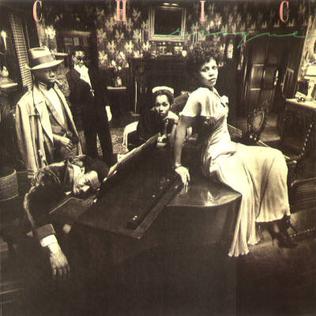
Chic is what happens when every instrument shows up overdressed and still somehow does only what is necessary.
That is the genius of Risqué.
Nile Rodgers’ guitar does not strum so much as wink. Bernard Edwards’ bass line walks into every song like it owns the lease. Tony Thompson’s drumming is clean and firm in how perfectly it sits. The strings glide in, make the room more expensive, and leave before anyone can accuse them of showing off.
This is disco with immaculate posture.
“Good Times” is the famous one, obviously. It is one of those songs so embedded in music history that it barely feels like a track anymore.
Bass players, DJs, rappers, producers, wedding guests, and your uncle with questionable rhythm have all lived inside that groove at some point.
But Risqué is not just “Good Times” plus some padding.
The whole album has a specific intelligence. Chic understood that disco did not need clutter to feel luxurious. Their music is not a pile of shiny things. It is a system of small, perfect decisions.
The guitar leaves room for the bass.
The bass creates motion without crowding the song.
The drums refuse drama because they know they do not need it.
The vocals sound cool enough to make desire seem like a well-managed business.
And beneath all that polish, there is always a joke, or at least a raised eyebrow.
Chic’s world is glamorous, but it is not innocent. Status, money, sex, taste, boredom, and pleasure keep circling one another. The music smiles, but it knows exactly what the room costs.
That is why Risqué works as a classic disco album, not just a collection of singles. Its unity comes from feel, not plot. Every song sounds as if it belongs to the same beautifully lit, slightly dangerous social space.
3. Sylvester – Step II (1978)

Step II is disco as lift, release, sweat, church, sex, glitter, and escape, all refusing to stay in their assigned lanes. It is one of the clearest examples of disco as a communal force rather than just a style with a beat pattern and some handclaps.
“You Make Me Feel (Mighty Real)” is the obvious giant.
No need to be cute about it. Some songs are famous because they are unavoidable. This one is unavoidable because it sounds like a ceiling getting ripped off the building.
The synths rush upward. The beat snaps into place. Sylvester’s falsetto cuts through everything, not as decoration but as command.
It is joyful, but not casual.
It sounds like joy with history behind it.
That matters because disco’s roots in Black, queer, and Latin club cultures are not optional trivia. They are part of the engine. This was music shaped by people who knew what it meant to need a room where the outside world had less authority for a while.
On Step II, disco is one of the places liberation tries to get its shoes on.
The album holds together because Sylvester’s presence is enormous. His voice gives the record its center. He can be flamboyant, tender, commanding, funny, overwhelming, and almost impossibly light, sometimes within the same stretch of music.
The production has plenty of sparkle, but the real spectacle is how much air he keeps finding.
“Dance (Disco Heat)” turns movement into an emergency. The slower moments do not weaken the album. They frame the big releases. You need some shadow around the flash, or else the flash means less.
The joy here is not shallow.
It is hard-won, physical, and loud enough to make shame look stupid.
That is why Step II belongs in any beginner’s guide to disco albums. It makes disco’s emotional stakes impossible to miss.
4. Cerrone – Supernature (1977)

Supernature is what happens when disco wanders into a laboratory and decides the machines look friendly enough.
This is the oddball of the five.
Cerrone takes disco’s pulse and sends it somewhere more synthetic. The warmth of Sister Sledge is not the point here. Neither is the vocal grandeur of Sylvester or Donna Summer.
Supernature is sleeker and stranger.
The title track is the reason people keep coming back. It is long, pulsing, eerie, and built around a science-fiction ecological nightmare, which is already a better premise than half the concept albums people pretend to enjoy.
The groove stays steady. The synths flash. The vocals sound human enough to hook you and strange enough to make you keep one eye on the exits.
That suspicion is the fun.
Supernature shows disco mutating in real time. You can hear paths opening toward synth-pop, Hi-NRG, electronic dance music, and a whole future of club music that would make the “disco died” story look even dumber than it already was.
Disco did not die.
It changed tempo. Changed equipment. Moved into different rooms. Got new names. Kept going.
Cerrone helps make that afterlife audible before anyone has finished writing the obituary.
As an album, Supernature works because it has such a specific temperature. It is not a random set of tracks. It feels like a sleek electronic trip where pleasure and unease keep sharing the same seat.
5. Sister Sledge – We Are Family (1979)

The title track is so famous that it is almost hard to hear.
That is the curse of usefulness. A song becomes perfect for weddings, reunions, ballparks, commercials, and every public moment that needs instant togetherness. Eventually people treat it like a slogan with a bass line.
But We Are Family is much better than its own overfamiliarity.
Produced by Nile Rodgers and Bernard Edwards, the album has Chic’s clean rhythmic intelligence: guitar patterns that click into place, bass lines that move with style, strings that polish without smothering, and drums that understand the value of not making a mess.
But Sister Sledge change the emotional temperature.
Chic can sound like the coolest people at the party are quietly judging the catering.
Sister Sledge sound like they actually want you to come in.
That warmth is the album’s strength. We Are Family is disco as kinship, not just glamour. It is not as wild as Sylvester, not as strange as Cerrone, not as grand as Donna Summer, and not as cutting as Chic.
Its gift is generosity.
The group vocals matter. They give the songs a shared identity before the lyrics even start spelling it out. The title track works because the feeling is already in the rhythm and the voices. The words simply confirm what the music has been doing all along.
That is what people forget when a song becomes too useful.
The album is deep because it makes joy feel social and available. It turns togetherness into a groove sturdy enough for millions of people to keep borrowing.
And yes, the title track dominates.
But the rest of the album gives it a home. Sister Sledge are not just faces on a Chic production. They bring personality and openness to a sound that could otherwise feel a little too flawless for its own good.
We Are Family is smarter than its own ubiquity.
That is a pretty good disco trick.
Why These Classic Disco Albums Still Matter
Disco’s greatness was never only about albums.
A single could do the job. A twelve-inch mix could do it better. A DJ could stitch records together and make the whole night feel like one long argument for staying out later than planned.
So yes, disco’s natural format was often the club. That does not mean disco albums are beside the point.
It means the best disco albums have different house rules.
They care about flow, groove, voice, repetition, production, persona, release, and the feeling of people finding one another through sound.
These five records answer the album question in different ways.
The old anti-disco story treated pleasure as proof of emptiness, especially when that pleasure came from Black, queer, Latin, female, and working-class spaces. But disco’s pleasure was never empty. It was social. Physical. Inventive. Defiant. It helped people become louder versions of themselves together.
Disco left behind classic albums.
They just do not sit there pretending the body is beneath them.
They get up and move.
This article is part of the Genre Starter Guides series, which explores the essential albums of influential musical genres. Including:


